
The state layer
Illinois is unusual: it does not adopt the IPC or the UPC. The Illinois Plumbing Code (77 Ill. Adm. Code 890) is written and enforced by the Illinois Department of Public Health and carries its own backflow provisions. On freezing it is stricter than the model codes. Section 890.1130 says backflow preventers "shall not be installed where they would be subject to freezing conditions," and that in-line double check and reduced pressure assemblies may not be installed "where [they are] subject to freezing or flooding conditions." The one outdoor exception is Section 890.1140(d): a lawn-sprinkler RPZ "may be located outside provided that it is protected from freezing or is removed at the end of the season." Assemblies must be accessible for maintenance and are tested by a Cross-Connection Control Device Inspector before operation and at least annually. Illinois EPA separately requires every community water supply to run a cross-connection control program (35 Ill. Adm. Code 604.1505).
What Chicago adds
Chicago's plumbing code (Municipal Code 18-29-603.3.4) requires every new combination fire-and-domestic service to carry a domestic meter and an approved backflow assembly with a bypass meter for the fire system. Where the meter would sit more than 50 feet (1" to 2" services) or 100 feet (3" and larger) from the property line, the code requires "the backflow preventer to be installed in an above ground-heated enclosure 'hot box,' located as close to the property line as physically possible." Shorter services stay inside the building, and meter vaults in the public way remain the rule for long services and for private-hydrant mains. Above ground in Chicago means a heated enclosure by the code's own words: a fire line cannot be drained, and the design low is well below zero.
Suburban and downstate systems set their own installation standards on top of the state code; confirm with the system before quoting an outdoor assembly of any kind.
What this means for a cover
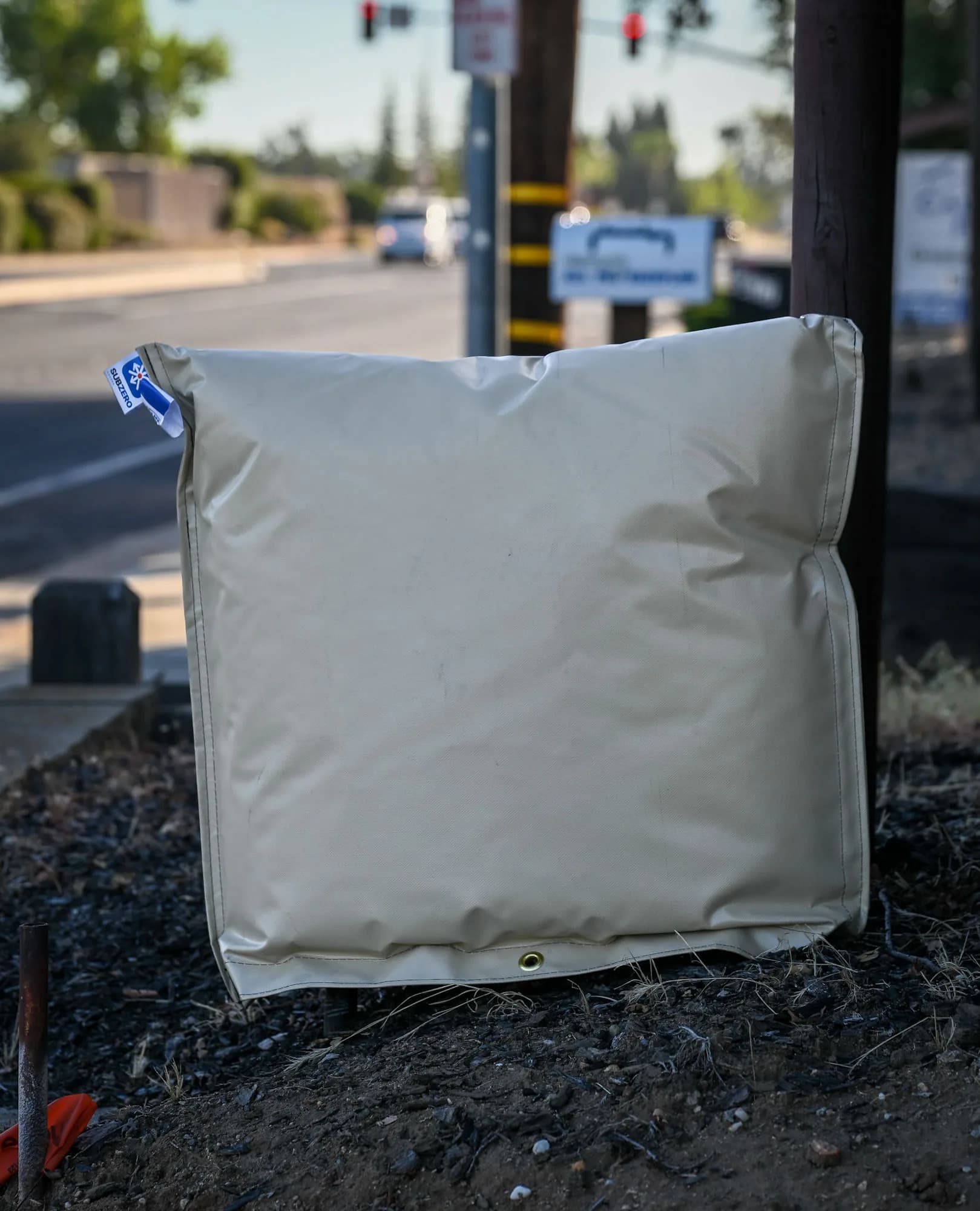
- Fire lines in Chicago and the collar counties: where the code puts the assembly outside, a heated enclosure. The cover's role is insulation under the heat, which matters when the power fails in an ice storm.
- Domestic and commercial RPs: the state code keeps them out of freezing locations, so most Illinois assemblies are indoors. The lawn-sprinkler RPZ is the outdoor case the code allows, and "protected from freezing or removed at the end of the season" is exactly what an insulated cover plus a fall blowout provides.
- Irrigation: drained by October. Covers for the shoulder seasons only; the PVB and Watts 007 volume is September and April.
Market notes
Chicagoland is a large commercial and fire-protection market where enclosures dominate outdoors and most domestic assemblies are inside. Cover volume is irrigation shoulder-season plus the insulation layer under heated fire-line installs. Fire protection distributors and plumbing houses order through the distributor program. Ohio's rules are on the Ohio page.