
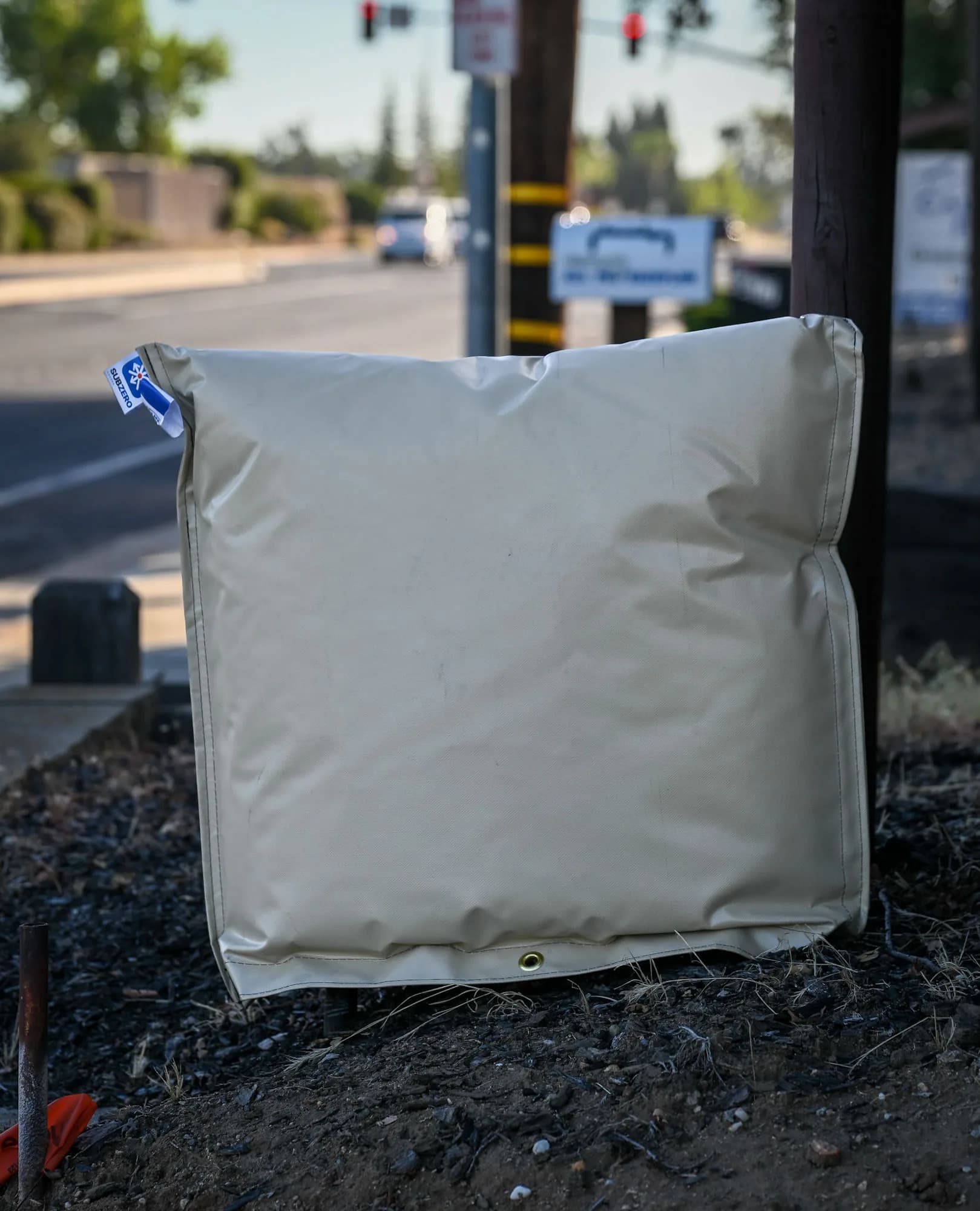
Pressure vacuum breakers — PVB — are the irrigation industry's default above-grade backflow on residential and light commercial sprinkler systems. They are shorter than RPs, shaped differently from DCV double checks, and installed by the thousands in every irrigation supply territory.
Every fall, contractors buy PVB covers — or they buy the wrong cover and blame the distributor.
Why PVB-specific covers matter
PVB assemblies load from the top — bonnet and poppet mechanisms need vertical clearance. Test cocks and shutoffs sit in a compact profile roughly knee to waist height above grade. An RP cover cinched around a PVB looks like a dress on a mailbox and performs about as well in wind.
PVB patterns match:
- Assembly height without excess bag length flapping in weather
- Bonnets and test ports in standard orientation
- Insulation depth appropriate to the smaller thermal mass of PVB bodies versus large RP castings
Brands on irrigation trucks
Top PVB patterns align with brands your contractors already install:
- Watts 800 series — national volume leader on many irrigation shelves
- Febco 765 — strong spec share in Western and Mountain markets
- Wilkins PVB models — see Wilkins covers
Stock the PVB SKUs that match your valve movers — attach rate at winterization season is the goal.
Merchandising for irrigation distributors
Place PVB covers next to blowout plugs, compressor rental signage, and controller shutdown checklists. The contractor grabbing blowout fittings should see the cover SKU at eye level.
Pair educational content on measuring assemblies with counter scripts: "What is the model on the PVB tag?" — same workflow as Watts 007M1QT RP calls, different bin.
Distributor only
Sub Zero Covers sells PVB covers through distributors — not to landscapers direct. Protect your margin on a high-velocity seasonal SKU.
Custom PVB specs available in 3–5 business days for non-standard riser heights or tight landscape enclosures.
Wind is the hidden spec
PVB covers fail in the field when they are too long, too loose, or sized for the wrong assembly class. A bag flapping off a short PVB bonnet is not a product quality issue — it is a fit issue. Irrigation supply counters that stock PVB-specific patterns see fewer "it blew off" calls and more reorders from landscapers who trust the fit.
Riser height variations on the same model
Two Watts 800 PVBs on the same street can sit at different riser heights above grade. Catalog PVB covers fit the assembly; extreme riser extensions may need custom height confirmation. When a landscaper says "it sticks up higher than normal," measure before quoting.
PVBs by name
Watts 800M4, Febco 765, Zurn 720A, Apollo PVB4A: the cover finder lists each with its width, and the model pages for the 800M4 and 765 walk through sizing to the riser. The bonnet stays free to vent; the height comes from the pad, not the valve.