
The state layer
Colorado's Department of Public Health and Environment regulates backflow through Regulation 11 (the Colorado Primary Drinking Water Regulations), section 11.39, which requires every public water system to run a backflow prevention and cross-connection control program. The regulation sets program requirements — surveys, testing, records — and leaves installation details to the systems.
Colorado also has a statewide plumbing code. The State Plumbing Board adopts the International Plumbing Code by rule (3 CCR 720-1, Rule 1.2) as the Colorado Plumbing Code, the minimum standard statewide; local governments may amend it only to be at least as strict (C.R.S. 12-155-106). The current rule incorporates the 2021 IPC, and the Board moved in June 2026 to adopt the 2024 edition. Either way the two provisions carry over unchanged: protected from freezing by heat, insulation or both (§608.15.2) and the ASSE 1060 enclosure requirement (§608.15.1).
What Denver Water adds
Denver Water's backflow program publishes installation requirements that Front Range systems tend to copy:
- Assemblies 12 inches clear of the floor and wall, with a platform required above five feet
- RP assemblies installed with drainage for the relief valve
- Assemblies protected from freezing
On its program page that language leaves the method open. Denver Water's Engineering Standards and standard details go further: the default location for commercial domestic and fire-line assemblies is inside a heated part of the building, and the outdoor standard detail (CPCS detail 33282) is an enclosure, heated or non-heated, on a 4-inch concrete pad. Insulation remains a code-named method under the IPC, but on a Denver Water containment assembly expect the inspector to look for the standard-detail installation.
The second driver: theft
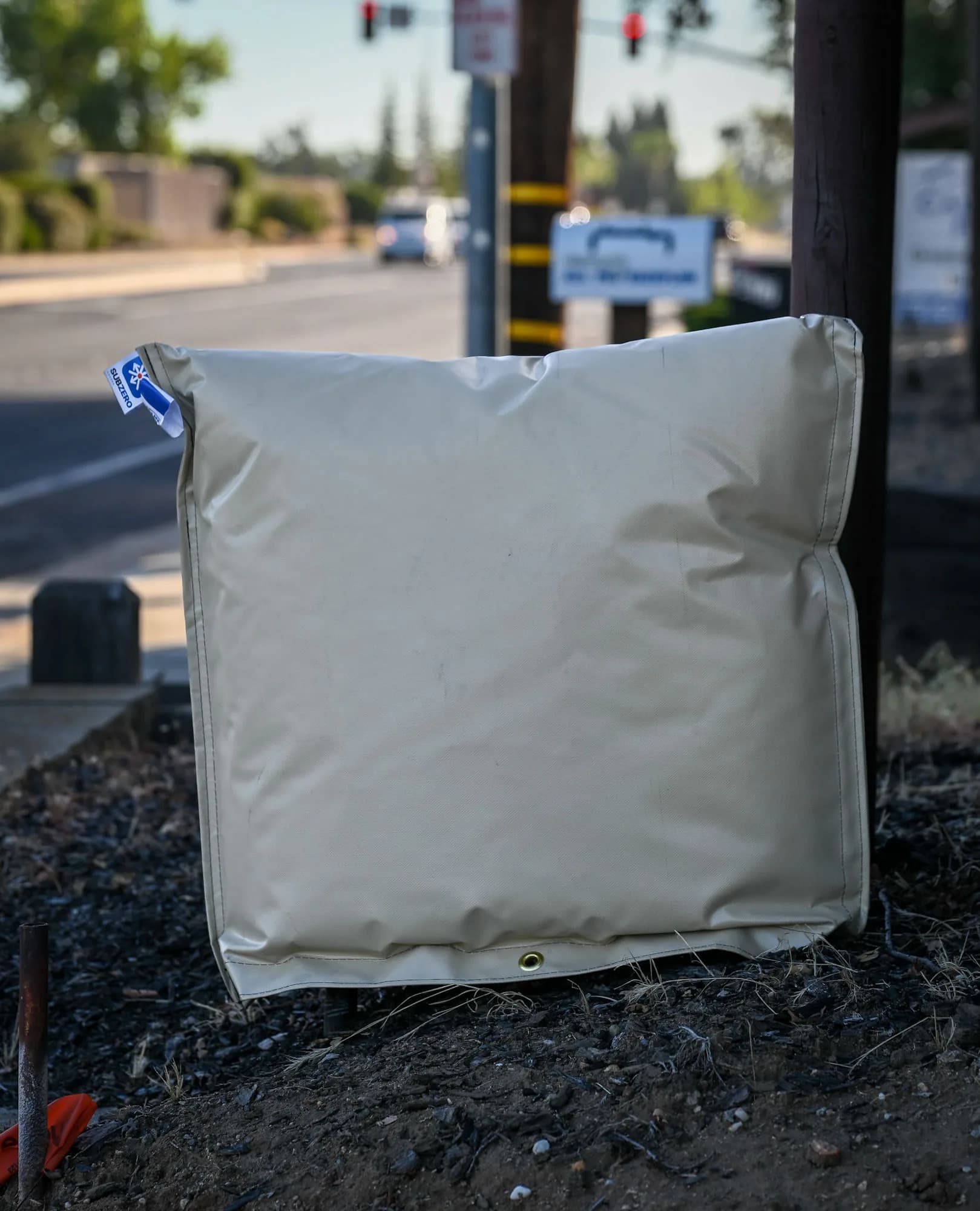
Colorado water districts have been issuing backflow theft alerts. Columbine, Bow Mar, and Southwest Metropolitan water and sanitation districts, which share one operating office in Littleton, posted a joint notice in June 2024 after responding to "multiple reports of 'water breaks' or 'shooting geysers' that were the results of stolen backflow preventers," and Southwest Metro repeated it in August 2025 after another run of thefts. A stolen RP is a flooded property and a plumbing bill in the thousands; the assemblies most often taken are the exposed ones with nothing over them. A cover is not a security device, but our covers do take a padlock through the brass grommets, and a covered assembly is a less obvious target than bare brass. See the Made in USA construction notes for grommet specs.
What this means for a cover
- Commercial RPs in year-round service: above ground, 12 inches clear, relief draining, protected from freezing. An insulated cover sized to the assembly meets that description; confirm with the system if it is on the containment side of the meter. See RP covers.
- Fire service DCDAs: ask the fire department and the water system; a supervised heated enclosure is common on fire lines. See DCDA covers for the non-fire cases.
- Irrigation assemblies: most are winterized and removed. Covers matter for the ones left in place on commercial properties and for the shoulder seasons when the system is charged and a late frost hits.
Market notes
Denver, Colorado Springs, and Fort Collins carry the commercial volume. Mountain towns run colder and longer, and their assemblies are more often indoors or in heated enclosures by design. Plumbing distribution houses and backflow testers with commercial routes see the most cover demand. Both order through the distributor program.